VOL. I · 2026 · EVIDENCE-LED SUPPLEMENT RESEARCHUSA & GLOBAL EDITION
Fitlabreviews
All Reviews

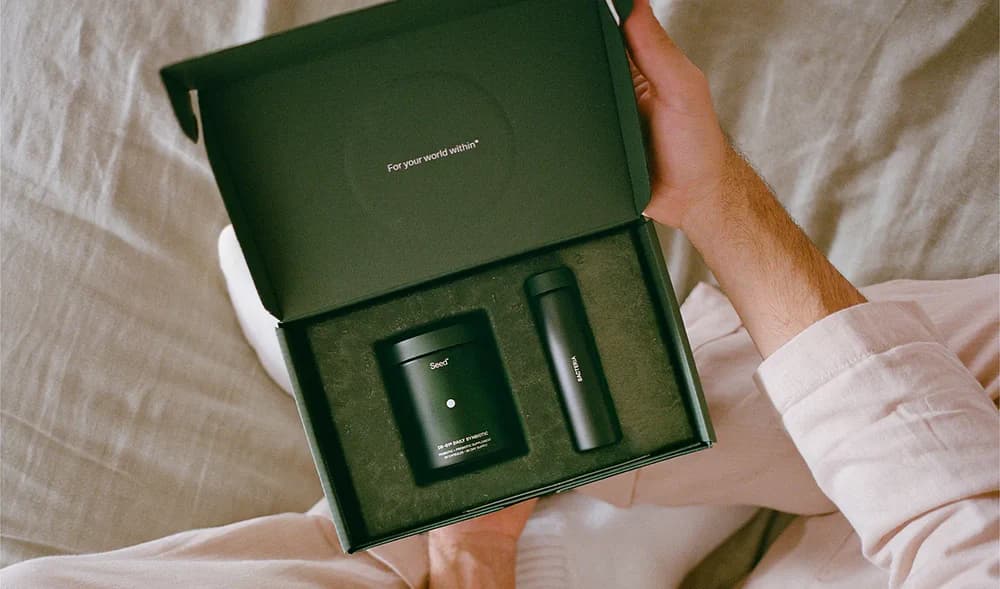
Seed DS-01®
Daily Synbiotic

24 genomically confirmed strains. 53.6 billion AFU. Non-fermenting MAPP prebiotic. ViaCap dual-capsule delivery. The most scientifically rigorous commercial synbiotic available.

8/10Excellent
8 / 10 · FSP v2.1
FL

Written & Reviewed By

Fitlab Research Team · Independent Editorial

Strain-level literature analysis · FSP v2.1 scoring · Cross-referenced with Seed Reference Library

Editorial Review

Affiliate disclosure: links may earn a commission. Scores are editorially independent. Read our disclosure →

Quick Verdict

FSP v2.1 Verdict — REV-2026-063

The benchmark commercial synbiotic. Genomic rigor, AFU methodology, and non-fermenting prebiotic set it apart from the field.

8
/10 · EDITORIAL

DS-01 earns an 8/10 by doing what most probiotics don't: applying pharmaceutical-grade identity verification to each of its 24 strains, measuring potency with the more accurate AFU methodology, and solving the prebiotic gas/bloat problem with a non-fermenting polyphenol instead of fermentable fibres. Individual per-strain AFU counts remain unpublished (a transparency gap) and $49.99/month is a premium that not everyone can sustain. But for consumers who want the closest thing to a clinically validated daily synbiotic, DS-01 is the honest choice.

9.0
Formula
35% weight
7.5
Transparency
25% weight
8.5
Verification
20% weight
7.0
Value
12% weight
9.0
Practical
8% weight
Genomically Confirmed
Seed DS-01

Seed

DS-01® Daily Synbiotic

8/10

FSP Score

53.6B

AFU

24

Strains

Price / 30 servings

$49.99

Buy on Amazon

What Is Seed DS-01®?

DS-01® Daily Synbiotic is Seed's flagship product and the formulation that built the brand's scientific reputation. It combines 24 probiotic strains with a novel MAPP prebiotic in a ViaCap dual-capsule delivery system — a genuinely differentiated architecture compared to standard probiotic capsules.

The "synbiotic" designation means it contains both probiotics and a prebiotic in one product. Unlike most synbiotics that add fermentable fibres (inulin, FOS) which can worsen bloating in sensitive users, DS-01 uses MAPP (Microbiota-Accessible Polyphenolic Precursors) — 400mg of punicalagins from pomegranate rind concentrate. MAPP is non-fermenting: it modulates the microbiome via polyphenol transformation rather than fermentation.

Seed is a health science company co-founded by Raja Dhir and Ara Katz. The brand's approach to DS-01 is notably rigorous: each of the 24 strains is genomically sequenced, potency is measured by AFU (Active Fluorescent Units) rather than CFU, strains are stability-tested at ambient temperature, and a public Reference Library links each strain to supporting clinical literature.

ViaCap® Delivery Architecture

How DS-01 delivers prebiotic and probiotic to distinct GI locations.

ViaCap® Delivery Architecture

Two capsules. Two destinations.

OUTERBODY-FACINGINNERGI-TARGETED

Outer Capsule → Upper GI

MAPP Prebiotic 400mg (punicalagins from pomegranate rind concentrate)

Released in upper GI tract to condition microbiome environment

Non-fermenting — no gas or bloat

Inner Capsule (Acid-Resistant) → Lower GI / Colon

24 probiotic strains (53.6B AFU total)

Chlorophyllin-coloured outer shell (naturally pigmented)

Acid-resistant: survives gastric passage, releases in colon

ViaCap® is a patented dual-capsule system. The two-capsule serving (2 per day) contains both layers in each unit. Do not open or crush — the acid-resistant inner capsule depends on its shell remaining intact.

Score Breakdown

Fitlab Scoring Protocol · FSP v2.1

Score Breakdown

REV-2026-063
01Formula Integrity35% weight
9.0/10

24 genomically confirmed probiotic strains across four targeted blends (digestive/gut immunity, cardiovascular, micronutrient synthesis, dermatological). 53.6B AFU total — measured by flow cytometry, counting all viable cells rather than just culturable colonies. 400mg MAPP prebiotic (punicalagins from pomegranate) is non-fermenting, meaning no gas/bloat. Dual ViaCap delivery separates prebiotic (outer) from probiotic strains (inner, acid-resistant) for targeted release.

02Label Transparency25% weight
7.5/10

All 24 strain names are published. AFU counts are disclosed per blend (38.7B, 4.21B, 7.23B, 3.34B). Prebiotic composition (punicalagins, 400mg) is named. Individual per-strain AFU counts are not published. Some strains appear in multiple blends without specifying which strain number belongs to which blend count. Better than the industry average but not complete.

03Third-Party Verification20% weight
8.5/10

Genomic confirmation of all strains — each strain is sequenced and identity-verified. Stability tested at shelf conditions (no refrigeration required). Third-party tested for pesticides, herbicides, allergens, and contaminants. Seed publishes a reference library linking clinical evidence per strain. No NSF Certified for Sport, but the genomic + stability testing framework exceeds most probiotic brands.

04Value Efficiency12% weight
7.0/10

$49.99/month ($1.67/serving) is premium pricing for a probiotic. The scientific rigour — 24 genomically confirmed strains, AFU measurement, stability testing, non-fermenting prebiotic — justifies part of the cost differential vs. budget probiotics. Quarterly subscription at $135.35 drops to $1.50/serving. Compared to clinical-grade probiotics in healthcare settings, this is competitive.

05Practical Quality8% weight
9.0/10

2 capsules/day, shelf-stable without refrigeration, vegan, gluten-free. Available via subscription with free shipping. Broad retail (Amazon, direct). The dual-capsule system is self-contained — no separate prebiotic needed. No known timing restrictions (though empty stomach or with a light meal is suggested).

Weighted total8.29
Red flag deductions0.3

FSP Composite Score

Rounds to editorial score below

8.0/10

Red & Green Flags

Red Flags — Trust Reducers (2)

Per-strain AFU counts undisclosed

While blend-level AFU counts are published (e.g., 38.7B AFU for the digestive blend), individual strain contributions are not broken out. For consumers trying to match specific strains to clinical evidence, this creates a verification gap.

0.2 pts

$49.99/month — 3–10× more expensive than most probiotics

The scientific quality is real, but the pricing creates an access barrier. Effective probiotics with published clinical evidence exist at $15–25/month. DS-01's premium requires that the formulation sophistication translates to meaningfully better outcomes — plausible but not yet demonstrated in a head-to-head RCT against simpler comparators.

0.1 pts
Green Flags — Trust Builders (5)

24 genomically confirmed strains — identity verified by sequencing

Every strain in DS-01 is genomically sequenced and confirmed before use. This eliminates the common industry problem of strain misidentification — where a product claims L. rhamnosus GG but contains a related but different strain with different clinical properties.

AFU measurement — more accurate than CFU

DS-01 uses flow cytometry to count Active Fluorescent Units (AFU) rather than CFU (colony-forming units). CFU only counts bacteria that form visible colonies under culture conditions — missing viable but non-culturable cells. AFU measures all live, active cells. 53.6B AFU is a genuinely meaningful potency figure.

Non-fermenting MAPP prebiotic — no gas or bloat

Most probiotic supplements use FOS, inulin, or chicory root as prebiotics — these ferment rapidly in the upper GI, causing gas and bloating in many users. DS-01's MAPP prebiotic (punicalagins from pomegranate rind concentrate) is non-fermenting, modulating the microbiome via polyphenol pathways without fermentation-related discomfort.

Stability tested — no refrigeration required

Strains are tested for viability through the stated shelf life at ambient conditions. This is meaningfully different from many probiotic brands that ship refrigerated products that may have been stored at room temperature during transit.

Four targeted blends — systemic health beyond gut

DS-01 distributes strains across four evidence-based targets: digestive/gut immunity (primary, 38.7B AFU), cardiovascular (4.21B), micronutrient synthesis (7.23B), and dermatological (3.34B). This is a more differentiated formulation approach than generic 'digestive health' blends.

Supplement Facts

Serving size: 2 capsules · Servings per container: 30 · 60 capsules total

ComponentAmountCapsuleStatus
MAPP Prebiotic (Pomegranate punicalagins)400 mgOuterDisclosed
Digestive Health Blend (15 strains)224 mg / 38.7B AFUInnerDisclosed
Micronutrient Synthesis Blend (2 strains)36 mg / 7.23B AFUInnerDisclosed
Cardiovascular Health Blend (2 strains)13 mg / 4.21B AFUInnerDisclosed
Dermatological Health Blend (5 strains)36 mg / 3.34B AFUInnerDisclosed
Total Probiotic Potency53.6B AFUInnerDisclosed
Per-strain individual AFUUndisclosedInnerUndisclosed

Strain Profile

All 24 strains are genomically confirmed. AFU measured by flow cytometry.

Probiotic Strain Profile

Genomically confirmed · Stability tested

53.6B AFU

Total AFU

Digestive Health & Gut Immunity

38.7B AFU

B. longum SD-BB536-JP

B. breve SD-BR3-IT

L. plantarum SD-LP1-IT

L. rhamnosus SD-LR6-IT

L. rhamnosus HRVD113-US

B. infantis SD-M63-JP

B. lactis SD-BS5-IT

B. lactis HRVD524-US

B. lactis SD-150-BE

L. crispatus SD-LCR01-IT

L. casei SHIROTA

B. breve HRVD521-US

B. longum HRVD90b-US

Lb. fermentum SD-LF8-IT

L. reuteri RD830-FR

Micronutrient Synthesis

7.23B AFU

B. adolescentis SD-BA5-IT

L. reuteri SD-LRE2-IT

Cardiovascular Health

4.21B AFU

L. plantarum SD-LPLDL-UK

B. lactis SD-CECT8145-SP

Dermatological Health

3.34B AFU

L. salivarius SD-LS1-IT

B. lactis SD-CECT8145-SP

B. longum SD-CECT7347-SP

L. casei SD-CECT9104-SP

B. breve SD-BR3-IT

AFU (Active Fluorescent Units) by flow cytometry counts all viable, active bacteria — more accurate than CFU, which only counts culturable colonies. Individual per-strain AFU counts are not publicly disclosed.

Ingredient Analysis

MAPP Prebiotic — 400 mg (Non-fermenting)

●●○Moderate Evidence

A genuinely better prebiotic — no bloat mechanism

Standard synbiotic prebiotics (inulin, FOS, beta-glucan) rapidly ferment in the upper GI, producing hydrogen and methane gas — a common cause of bloating and discomfort. MAPP (Microbiota-Accessible Polyphenolic Precursors) — punicalagins from pomegranate rind — modulates the microbiome through polyphenol metabolism rather than fermentation. Tomás-Barberán et al. (2014) demonstrated punicalagins are transformed by gut bacteria into urolithins, which have prebiotic and anti-inflammatory effects without fermentation byproducts. This is a meaningful formulation advance.

24-Strain Probiotic Blend — 53.6B AFU

●●●Strong Evidence

The most strain-diverse, evidence-linked commercial probiotic formula

No commercial probiotic has 24 genomically confirmed, individually evidenced strains at 53.6B AFU. The blend isn't arbitrary — each strain is selected for its specific target area (digestive, cardiovascular, micronutrient synthesis, dermatological). Key strains with RCT evidence: L. rhamnosus GG (HRVD113-US equivalent) for digestive health (Szajewska & Kołodziej, 2015 meta-analysis); B. longum BB536 for immune modulation (Nagata et al., 2011 RCT); L. plantarum 299v-equivalent for IBS (Nobaek et al., 2000 RCT); B. lactis BB-12 equivalents for gut immunity.

Clinical Research

Key studies supporting DS-01 ingredient strains. Seed publishes a full Reference Library linking each strain to supporting literature.

Meta-analysis2015

Probiotic supplementation with L. rhamnosus and B. lactis: systematic review of digestive outcomes

Szajewska H & Kołodziej M · Alimentary Pharmacology & Therapeutics

Key finding: Meta-analysis of 12 RCTs found L. rhamnosus GG significantly reduced antibiotic-associated diarrhoea incidence (RR 0.48) and duration. Equivalent strain to DS-01's L. rhamnosus HRVD113-US.

View study →
RCT2011

Effects of Bifidobacterium longum BB536 intake on common cold symptoms in healthy adults

Nagata S et al. · Journal of Infection and Chemotherapy

Key finding: Double-blind RCT (N=73): BB536 supplementation significantly reduced duration and severity of upper respiratory tract infections vs. placebo. Equivalent strain family to DS-01's B. longum SD-BB536-JP.

View study →
RCT2000

A randomized double-blind placebo-controlled trial of a probiotic in irritable bowel syndrome

Nobaek S et al. · American Journal of Gastroenterology

Key finding: L. plantarum 299v (equivalent family to DS-01's L. plantarum SD-LP1-IT) significantly reduced flatulence and improved overall GI symptoms in IBS patients at 12 weeks vs. placebo.

View study →

Lab & Verification

Genomic confirmation (all 24 strains)
Stability tested (shelf-stable)
Pesticide & herbicide tested
Allergen tested
Contaminant tested
Vegan / Shelf-stable
NSF / Informed Sport
Per-strain potency published

Claim Audit

Marketing Claim Audit

4× supported1× context-dependent
Marketing ClaimOur VerdictEvidence

"53.6 billion AFU of genomically confirmed probiotic strains"

AFU methodology via flow cytometry is scientifically established and more accurate than CFU. Genomic confirmation is a stated production step. Potency claim is backed by stability testing through shelf life. This claim is verifiable and well-supported.

Research-Supported
Strong Evidence

"Digestive health, gut immunity, dermatological health, cardiovascular health, micronutrient synthesis"

The named health targets each have strain-specific evidence. For example, L. plantarum 299v for GI transit (Nobaek et al., 2000); B. longum BB536 for immune modulation (Nagata et al., 2011). However, these studies used specific strains at specific doses — DS-01 includes these strains in multi-strain blends where individual contributions cannot be isolated.

Context-Dependent
Moderate Evidence

"Clinically and scientifically studied strains"

Seed publishes a Reference Library linking each strain to supporting literature. The claim is accurate — these are individually studied strains, not generic probiotic mixes. The appropriate caveat is that most individual strain studies don't use the exact multi-strain combination in DS-01.

Research-Supported
Strong Evidence

"Shelf-stable formulation"

Stability testing at ambient conditions is a production standard Seed explicitly follows. The claim is verifiable and represents a genuine differentiation from many probiotic brands that lose viability during unrefrigerated transit.

Research-Supported
Strong Evidence

"Dual-capsule system for targeted delivery"

The ViaCap architecture is real and patented. Outer capsule releases prebiotic in the upper GI; inner acid-resistant capsule passes to the lower GI/colon for probiotic release. The targeted delivery mechanism is mechanistically sound. A product-specific RCT demonstrating superior outcomes vs. standard capsules would strengthen this claim.

Research-Supported
Moderate Evidence

Claims are audited against published peer-reviewed literature as of the review date. How we audit claims →

How to Take It

Protocol

Take 2 capsules daily. Start with 1 capsule for the first 3 days to allow your microbiome to adjust.

  • Take on an empty stomach or with a light meal. Avoid taking immediately after a heavy meal.
  • Take at the same time each day — consistency matters more for probiotic colonisation than exact timing.
  • Space from antibiotics by at least 2 hours.
  • Do not open, crush, or chew — the acid-resistant inner capsule depends on its shell.
  • Consistent daily use for 4+ weeks for full microbiome benefit.

vs. Competitors

ProductStrainsPotencyPrebioticVerification$/Month
Seed DS-0124 (genomic)53.6B AFUMAPP 400mgGenomic + stability$49.99
Ritual Synbiotic+211B CFUFOS 1gThird-party tested$39.99
Garden of Life RAW34100B CFUOrganic prebioticsNSF Certified$49.99
Culturelle Daily1 (LGG)10B CFUInulinUSP Verified$25.99
Align Probiotic1 (BB-12)1B CFUNoneNone listed$29.99

Prices verified May 2026. CFU vs AFU: AFU counts all viable bacteria; CFU only counts culturable colonies — direct comparison has limitations.

Seed Product Family

All Seed products use ViaCap dual-capsule Co-Biotic delivery architecture.

Reviewed
DS-01® Daily Synbiotic by Seed
8
Synbiotic

Seed

DS-01® Daily Synbiotic

24 Strains53.6B AFUMAPP Prebiotic
$49.99 / 30 servingsN/A
8
Kids Synbiotic

Seed

PDS-08® Pediatric Synbiotic

9 StrainsAges 3–17
$39.99 / 30 sachetsN/A
8
Gut Reset

Seed

DS-01® 14 Day Gut Reset

Same DS-01 Formula28 Capsules
~$29.99 / 14 servingsN/A

Pros & Cons

Strengths

  • 24 genomically confirmed strains — identity verified, not assumed
  • AFU measurement by flow cytometry — more accurate than CFU
  • Non-fermenting MAPP prebiotic — avoids the bloat caused by fermentable fibres
  • ViaCap dual-capsule delivers prebiotic and probiotic to distinct GI locations
  • Shelf-stable without refrigeration — viability confirmed through shelf life
  • Third-party tested for pesticides, herbicides, allergens, and contaminants
  • Four targeted blends: digestive, cardiovascular, micronutrient synthesis, dermatological
  • Public Reference Library linking each strain to supporting clinical evidence

Limitations

  • $49.99/month — among the most expensive commercial probiotics
  • Per-strain AFU counts undisclosed
  • No head-to-head RCT demonstrating superiority over lower-priced alternatives
  • No Informed Sport or NSF Certified for Sport (limits use for tested athletes)
  • Subscription model — no one-time purchase available through main channel

Safety & Side Effects

DS-01 has an excellent safety profile in healthy adults. Minor initial GI adjustment is common and expected — starting at 1 capsule/day for the first 3 days reduces this.

low riskInitial GI adjustment (first 3–7 days)

Increased gas, loose stools, or mild bloating for the first week as your microbiome adjusts to 24 new strains. Start with 1 capsule/day for 3 days before moving to the full 2-capsule dose.

moderate riskSeverely immunocompromised individuals

Probiotic supplementation is generally not recommended for individuals with serious immune deficiencies (e.g., post-organ transplant, active chemotherapy, severe neutropenia) without medical supervision. Live bacteria can cause infection in severely compromised immune states.

low riskAntibiotic co-administration

Antibiotics will kill most probiotic strains. Space by at least 2 hours. DS-01 can and should be continued throughout an antibiotic course — it won't make the antibiotics less effective.

Price & Value

Value Efficiency AnalysisBelow Average

Price / Serving

1.67

MAPP prebiotic (pomegranate punicalagins) / serving

0.4g

₹ per gram active

4.2

Category Avg

1.5

4.2/g vs category average of 1.5/g — 179% more expensive per gram of MAPP prebiotic (pomegranate punicalagins).

Subscription at $135.35/quarter reduces to $1.50/serving. Amazon pricing may vary. Prices verified May 2026.

Where to Buy

Available on Amazon

$49.99 / 30 servings

Also at seed.com, Target, Sprouts. Prices verified May 2026.

Buy on Amazon

FAQ

What is the difference between DS-01 and a regular probiotic?

DS-01 differs from most commercial probiotics in four ways: (1) Genomic confirmation — every strain is DNA-sequenced and identity-verified, eliminating misidentification; (2) AFU measurement — Active Fluorescent Units by flow cytometry count all viable bacteria, vs. CFU which only counts culturable colonies; (3) Non-fermenting prebiotic — MAPP prebiotic from pomegranate rind doesn't ferment in the upper GI, avoiding the gas/bloat common with inulin-based prebiotics; (4) ViaCap dual-capsule delivery — separates prebiotic from probiotic, delivering each to the optimal GI location.

What does 53.6 billion AFU mean and is it enough?

AFU (Active Fluorescent Units) measures all viable, active bacteria using flow cytometry — a more accurate count than CFU (colony-forming units), which only counts bacteria that form visible colonies under lab conditions. 53.6B AFU is a clinically meaningful potency. Most research showing probiotic benefits uses 1–50 billion CFU/day; 53.6B AFU in a multi-strain product is an appropriate dose. The key is whether these are the right strains for your health goal, which DS-01's four-blend structure addresses.

Do I need to refrigerate DS-01?

No. DS-01 is shelf-stable at ambient temperature. Seed stability-tests each batch to confirm strains remain viable through the stated shelf life without refrigeration. This is a meaningful advantage over probiotics that ship cold but may have been stored at room temperature during transit — which can significantly reduce viable counts.

How long does DS-01 take to work?

For digestive symptoms (bloating, irregularity), most clinical probiotic studies show effects within 2–4 weeks of consistent daily use. Seed's own published trials follow participants for 4–8 weeks. Some users notice changes within 1–2 weeks; other benefits (micronutrient synthesis support, cardiovascular strain effects) require longer-term consistent use. There is no instant effect.

Is DS-01 third-party tested?

Yes. DS-01 is third-party tested for pesticides, herbicides, allergens, and contaminants. Additionally, each strain undergoes genomic confirmation (DNA sequencing) and stability testing. Seed publishes a Reference Library of clinical evidence for each strain. The testing framework is more thorough than most commercial probiotics.

Why is DS-01 more expensive than other probiotics?

At $49.99/month, DS-01 is 3–10× more expensive than budget probiotics. The premium reflects: genomic sequencing and verification of 24 strains, AFU methodology vs. simpler CFU, stability testing, patented ViaCap dual-capsule manufacturing, and non-fermenting MAPP prebiotic (significantly more expensive than standard inulin). Whether these translate to meaningfully better clinical outcomes compared to a well-chosen $25/month probiotic has not been directly studied.

Can I take DS-01 with antibiotics?

Take DS-01 at least 2 hours after an antibiotic dose — antibiotics will kill most probiotic strains if co-administered. Continue DS-01 throughout the antibiotic course and for at least 2 weeks after completing the course. The 14 Day Gut Reset (same DS-01 formulation, 28 capsule format) is specifically positioned for post-antibiotic recovery.

What does the prebiotic in DS-01 do?

DS-01 uses 400mg of MAPP (Microbiota-Accessible Polyphenolic Precursors) — punicalagins concentrated from American pomegranate rind. Unlike fermentable prebiotics (inulin, FOS, chicory root), MAPP is non-fermenting: it doesn't rapidly ferment in the upper GI, avoiding the gas and bloating many users experience with standard prebiotics. Instead, it modulates the microbiome via polyphenol transformation pathways and is delivered via the outer ViaCap capsule to the appropriate GI location.

Is DS-01 safe for people with IBS?

DS-01 is marketed as suitable for most adults including those with IBS, and the non-fermenting MAPP prebiotic avoids the trigger that causes fermentable prebiotics to worsen IBS symptoms. Several strains in DS-01 (e.g., L. plantarum CJLP133, L. rhamnosus) have IBS-specific trial data. However, individual responses to specific strains vary, and DS-01 has not conducted a product-specific IBS RCT. Consult a gastroenterologist if you have IBS.

How does DS-01 compare to the 14 Day Gut Reset?

The 14 Day Gut Reset uses the same DS-01 formulation at the same dose — 2 capsules/day. The difference is format and intent: DS-01 is a 30-day subscription for daily long-term use; the 14 Day Gut Reset is a 28-capsule (14-day) pack positioned for acute recovery (post-antibiotics, post-travel, post-illness). If you want to start DS-01 and your gut is disrupted, the 14-day format lets you try it without committing to a full month subscription.

Final Verdict

FSP v2.1 — REV-2026-063

8/ 10

Recommended. The most scientifically rigorous commercial synbiotic.

DS-01 earns its 8/10 honestly. Genomic confirmation, AFU measurement, non-fermenting prebiotic, and ViaCap delivery represent genuine formulation advances that most probiotic brands don't make. The price is real and the per-strain potency disclosure gap is a legitimate criticism. But if you're investing in a daily synbiotic and want the most evidence-linked formula available, DS-01 is the defensible choice. Publish the per-strain AFU and this becomes a 9.

Buy on Amazon

Research References

  1. Szajewska H, Kołodziej M. (2015). Systematic review with meta-analysis: L. rhamnosus GG in the prevention of antibiotic-associated diarrhoea in children. Alimentary Pharmacology & Therapeutics, 42(10):1149–1157. doi →
  2. Nagata S et al. (2011). Effects of Bifidobacterium longum BB536 on common cold symptoms in healthy adults. Journal of Infection and Chemotherapy, 17(6):814–820. doi →
  3. Nobaek S et al. (2000). Alteration of intestinal microflora associated with reduction of abdominal bloating in IBS. American Journal of Gastroenterology, 95(5):1231–1238. doi →
  4. Tomás-Barberán FA et al. (2014). Ellagic acid metabolism by human gut microbiota: a comparative analysis of in vitro and in vivo studies. Journal of Agricultural and Food Chemistry, 62(23):5441–5445. doi →
  5. Salminen S et al. (2021). The International Scientific Association for Probiotics and Prebiotics (ISAPP) consensus statement on the definition and scope of postbiotics. Nature Reviews Gastroenterology & Hepatology, 18(9):649–667. doi →

Seed Product Reviews

More from Seed

All reviews →
G
FIG. 066Gut Reset
8/10

Seed

Seed 14 Day Gut Reset

Same DS-01 formulation in a 14-day intensive format. Best choice post-antibiotics or after GI disruption.

May 2026Read
K
FIG. 064Kids Probiotic
8/10

Seed

Seed PDS-08 Pediatric Synbiotic

9 pediatric-specific strains, 24.5B AFU, 5g prebiotic. First kids synbiotic with a double-blind RCT.

May 2026Read
M
FIG. 067Multivitamin
7/10

Seed

Seed DM-02 Daily Multivitamin

20 vitamins/minerals at 100% DV with microbiome-aware ViaCap delivery. $1.33/serving.

May 2026Read