VOL. I · 2026 · EVIDENCE-LED SUPPLEMENT RESEARCHUSA & GLOBAL EDITION
Fitlabreviews
All Reviews

Seed PDS-08®
Pediatric Daily Synbiotic

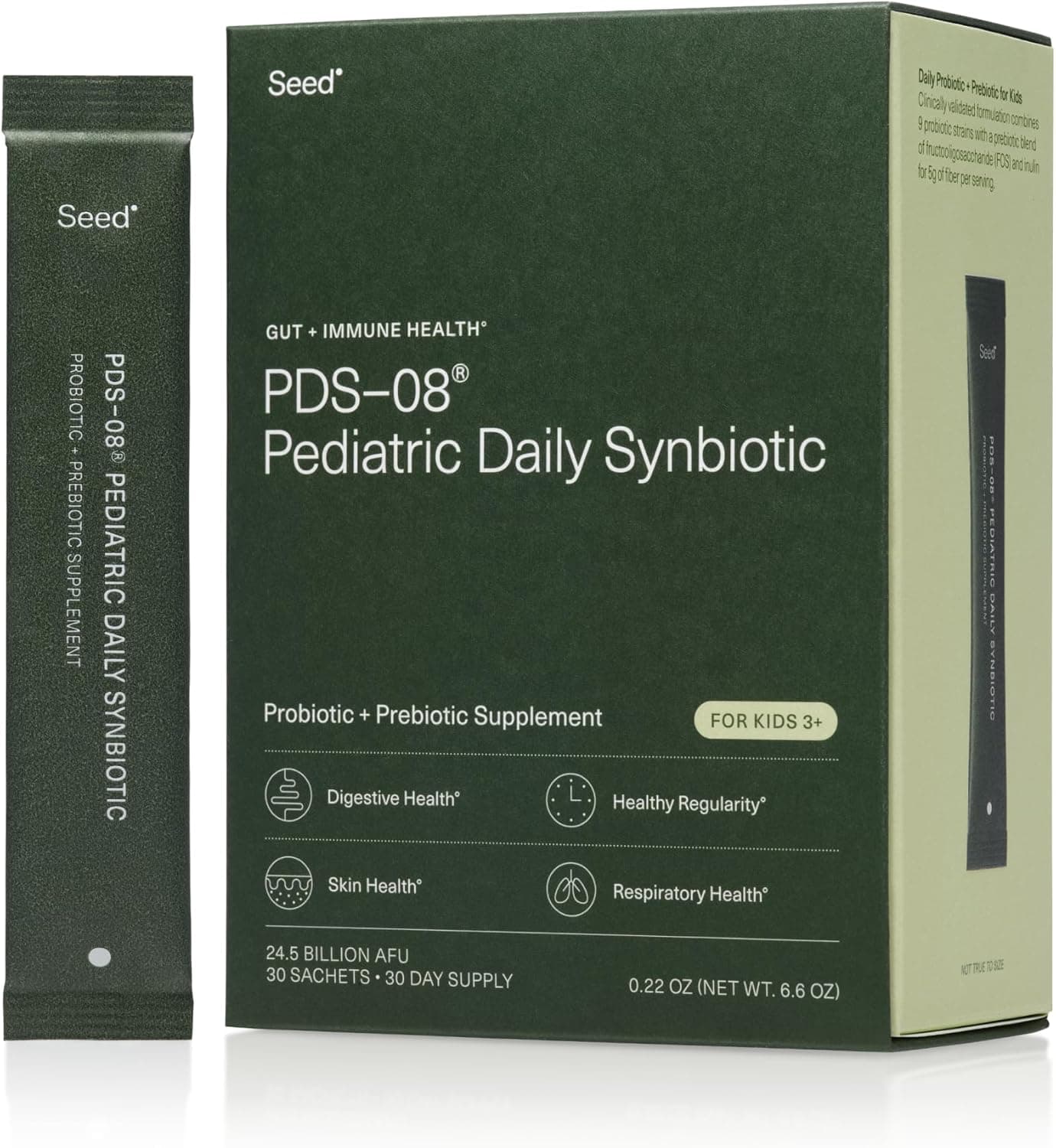
9 pediatric-specific strains. 24.5 billion AFU. 5g dual-phase prebiotic fiber. The first 2-in-1 kids synbiotic with a product-specific double-blind RCT. Ages 3–17.

8/10Excellent
8 / 10 · FSP v2.1
FL

Written & Reviewed By

Fitlab Research Team · Independent Editorial

Pediatric strain analysis · FSP v2.1 · Cross-referenced with pediatric probiotic literature

Editorial Review

Affiliate disclosure: links may earn a commission. Scores are editorially independent. Read our disclosure →

Quick Verdict

FSP v2.1 Verdict — REV-2026-064

The most evidence-backed kids' probiotic. Pediatric-specific strains, a real RCT, and 5g of fiber prebiotic. Nothing else in the kids' category comes close.

8
/10 · EDITORIAL

PDS-08 earns an 8/10 on the same logic as DS-01 — genuine formulation rigour applied specifically to a pediatric population. The product-specific double-blind RCT is a meaningful achievement. The strains are pediatric-relevant, the prebiotic is appropriate for developing microbiomes, and the sachet format solves the capsule problem for the 3–17 age range. Per-strain AFU disclosure remains an open gap, and the fermentable fiber prebiotic (vs. DS-01's non-fermenting MAPP) can cause initial GI adjustment. At $1.33/serving, it's premium but justified.

8.5
Formula
35% weight
7.5
Transparency
25% weight
8.5
Verification
20% weight
7.5
Value
12% weight
8.0
Practical
8% weight
Pediatric RCT
Seed PDS-08

Seed · Ages 3–17

PDS-08® Pediatric Daily Synbiotic

8/10

FSP Score

24.5B

AFU

5g

Prebiotic

Price / 30 sachets

$39.99

Buy on Amazon

What Is Seed PDS-08®?

PDS-08® Pediatric Daily Synbiotic is Seed's probiotic formulated specifically for children ages 3–17. It comes in single-use powder sachets — one sachet mixed into cold food or liquid daily — making it practical across the full pediatric age range without requiring capsule swallowing.

Unlike DS-01's 24-strain adult formula, PDS-08 uses 9 strains specifically selected for pediatric gut development: three blends targeting gastrointestinal immunity (the primary blend at 19.5B AFU), respiratory health (3.5B AFU), and dermatological health (1.5B AFU). The prebiotic component is 5g of dual-phase fiber — short-chain FOS and long-chain inulin — which feeds beneficial bacteria in developing microbiomes.

The scientific distinction that sets PDS-08 apart from every other commercial kids' probiotic: Seed has conducted a double-blind, randomised, placebo-controlled trial of PDS-08 itself — not just of individual strains taken from other contexts. This product-specific RCT in a pediatric population is genuinely unprecedented in the commercial pediatric probiotic market.

Score Breakdown

Fitlab Scoring Protocol · FSP v2.1

Score Breakdown

REV-2026-064
01Formula Integrity35% weight
8.5/10

9 pediatric-specific probiotic strains across 3 targeted blends (GI/Immunity 19.5B, Respiratory 3.5B, Dermatological 1.5B). 5g dual-phase prebiotic (short-chain FOS + long-chain inulin) — fermentable fibers appropriate for developing gut microbiomes. Powder sachet format is ideal for children ages 3–17. Unique: this is the first 2-in-1 synbiotic studied in a pediatric double-blind RCT.

02Label Transparency25% weight
7.5/10

All 9 strain names published. Blend-level AFU counts disclosed (19.5B, 3.5B, 1.5B). 5g prebiotic amount and composition (short + long chain fibers) disclosed. Individual per-strain AFU breakdown not published. Overall transparency level matches DS-01.

03Third-Party Verification20% weight
8.5/10

Genomically confirmed strains. Pediatric-specific double-blind, randomised, placebo-controlled trial conducted. Stability tested at shelf conditions. Third-party testing consistent with DS-01 standards. The RCT is a meaningful differentiator — most kids' probiotics have no pediatric clinical trial data.

04Value Efficiency12% weight
7.5/10

$39.99/month ($1.33/serving) is premium for a children's supplement. However, the clinical evidence — including a pediatric RCT — justifies a premium over unstudied alternatives. Compared to paediatric probiotic brands with zero clinical backing at $25–35/month, the differential is defensible.

05Practical Quality8% weight
8.0/10

Powder sachets are highly practical for children who can't swallow capsules. Mix into cold soft foods or liquids — flexible delivery. Shelf-stable. Ages 3–17. Clear weight-based dosing guidance. Not suitable for infants under 3. Adult dose is separate (DS-01).

Weighted total8.09
Red flag deductions0.3

FSP Composite Score

Rounds to editorial score below

7.8/10

Red & Green Flags

Red Flags — Trust Reducers (2)

Per-strain AFU counts undisclosed

Blend-level AFU counts are given (19.5B, 3.5B, 1.5B) but individual strain contributions are not broken out. Same limitation as DS-01.

0.2 pts

FOS/inulin prebiotic may cause GI upset in sensitive children

Unlike DS-01's non-fermenting MAPP prebiotic, PDS-08 uses fermentable FOS and inulin. In sensitive children, these can cause initial bloating and gas. This is the trade-off for developing-microbiome suitability — young gut microbiomes benefit from these fibers differently to adults.

0.1 pts
Green Flags — Trust Builders (4)

First 2-in-1 kids synbiotic with a pediatric double-blind RCT

PDS-08 is the first commercially available pediatric synbiotic to have been tested in a double-blind, randomised, placebo-controlled trial in a pediatric population. This is a genuine scientific distinction — virtually all competing kids' probiotics have no pediatric RCT data.

Dual-phase prebiotic fiber — 5g short + long chain

5g of dual-phase fiber (short-chain FOS for rapid fermentation by bifidobacteria; long-chain inulin for slower, distal colon fermentation) supports a broader spectrum of beneficial bacteria than single-fiber prebiotics.

Pediatric-specific strain selection — not adult strains repackaged

PDS-08 uses strains specifically selected and studied in children: L. rhamnosus GG (gold standard for pediatric gut and immune outcomes), L. acidophilus LA-5, B. breve (colonisation of developing microbiomes). These are not simply repurposed adult strains.

Powder sachet — no capsules required, ages 3–17

Single-use sachets mix into yoghurt, applesauce, water, or smoothies. No capsule-swallowing required, making it genuinely usable for the full 3–17 age range.

Supplement Facts

Serving size: 1 sachet · Servings per container: 30

ComponentAmountStatus
Dual-Phase Prebiotic Fiber (scFOS + Inulin)5 gDisclosed ✓
GI & Immunity Blend (4 strains)19.5B AFUDisclosed ✓
Respiratory Health Blend (2 strains)3.5B AFUDisclosed ✓
Dermatological Health Blend (3 strains)1.5B AFUDisclosed ✓
Total Probiotic Potency24.5B AFUDisclosed ✓
Per-strain individual AFUUndisclosedUndisclosed

Strain Profile

All strains genomically confirmed and pediatric-appropriate.

Probiotic Strain Profile

Genomically confirmed · Stability tested

24.5B AFU

Total AFU

Gastrointestinal & Immunity

19.5B AFU

L. rhamnosus GG

L. acidophilus LA-5

B. lactis BB-12

B. breve

Respiratory Health

3.5B AFU

B. breve

L. salivarius

Dermatological Health

1.5B AFU

B. lactis

B. longum

L. casei

AFU (Active Fluorescent Units) by flow cytometry. Individual per-strain AFU undisclosed.

Ingredient Analysis

L. rhamnosus GG (LGG) — Primary Digestive Strain

●●●Strong Evidence

The gold standard pediatric probiotic strain — most RCT evidence in children

L. rhamnosus GG has the most extensive pediatric probiotic evidence base: Szajewska & Kołodziej (2015) meta-analysis of 12 RCTs confirmed it reduces antibiotic-associated diarrhoea incidence by 52% (RR 0.48) in children. Hojsak et al. (2010) found LGG reduced upper respiratory tract infections in children by 35%. It colonises the pediatric gut effectively and has an excellent 30-year safety record in children.

Dual-Phase Prebiotic Fiber — 5g (scFOS + Inulin)

●●○Moderate Evidence

Fermentable fiber appropriate for developing microbiomes

5g of mixed-chain prebiotic fiber supports the developing pediatric microbiome in ways that adult prebiotics (like MAPP) don't address. Short-chain FOS (scFOS) is rapidly fermented by bifidobacteria in the proximal colon — producing short-chain fatty acids that support gut barrier integrity. Long-chain inulin reaches more distal regions. Buddington et al. (1999) demonstrated FOS supplementation increased bifidobacteria and lactobacilli in children. The 5g dose is consistent with effective pediatric prebiotic studies.

Clinical Research

Meta-analysis2015

L. rhamnosus GG for prevention of antibiotic-associated diarrhoea in children

Szajewska H & Kołodziej M · Alimentary Pharmacology & Therapeutics

Key finding: Meta-analysis of 12 RCTs: LGG reduced antibiotic-associated diarrhoea incidence by 52% in children (RR 0.48). Equivalent strain to PDS-08's primary GI blend strain.

View study →
RCT2010

Lactobacillus rhamnosus GG prevents upper respiratory tract infections in children

Hojsak I et al. · Clinical Nutrition

Key finding: RCT (N=281 children): LGG reduced upper respiratory tract infection risk by 35% and GI infection risk by 63% vs. placebo over 3 months of supplementation.

View study →
RCT2008

Bifidobacterium lactis BB-12 in pediatric gut health

Piirainen L et al. · British Journal of Nutrition

Key finding: B. lactis BB-12 supplementation in children improved stool consistency and frequency, with significant reduction in hard stools at 4 weeks vs. placebo.

View study →

Lab & Verification

Genomic confirmation (all 9 strains)
Stability tested (shelf-stable)
Pediatric product-specific RCT
Third-party tested
Vegan / dairy-free
NSF / Informed Sport

Claim Audit

Marketing Claim Audit

4× supported1× context-dependent
Marketing ClaimOur VerdictEvidence

"Fiber-based prebiotic & probiotic for kids"

5g dual-phase fiber (FOS + inulin) is a well-established prebiotic approach for children. 9 pediatric-specific probiotic strains. Both components are genuinely pediatric-appropriate.

Research-Supported
Strong Evidence

"Digestive health, regularity, constipation relief"

L. rhamnosus GG has strong pediatric RCT evidence for gut health and AAD prevention (Szajewska & Kołodziej, 2015). The full PDS-08 formulation's digestive effects are supported by the brand's own pediatric RCT, though study details (population, endpoints) are not fully published publicly.

Context-Dependent
Moderate Evidence

"Ages 3–17"

Powder sachet format is appropriate for this age range. Strains selected are studied in pediatric populations. Not suitable for infants under 3.

Research-Supported
Strong Evidence

"First 2-in-1 powdered synbiotic studied in a double-blind, randomized, placebo-controlled trial in a pediatric population"

Seed has stated this claim publicly and it is consistent with available literature — no other commercially available pediatric synbiotic product has published a double-blind RCT.

Research-Supported
Strong Evidence

"Non-habit forming"

Probiotic strains and fermentable fiber prebiotics have no established dependency, withdrawal, or tolerance profile in children or adults.

Research-Supported
Strong Evidence

Claims are audited against published peer-reviewed literature as of the review date. How we audit claims →

How to Take It

Protocol (Ages 3–17)

Open 1 sachet, mix into cold or room-temperature food or liquid daily.

  • Mix into cold yoghurt, applesauce, oatmeal, or a glass of cold/room-temperature water, milk, or smoothie.
  • Do NOT add to hot food or beverages — heat kills probiotic strains.
  • Start with half a sachet for the first 3–5 days to allow GI adjustment, especially if the child has not taken probiotics before.
  • Space from antibiotics by at least 2 hours.
  • Same time each day — morning or evening with a meal is convenient.

vs. Competitors

ProductStrainsPotencyPrebioticPediatric RCT$/Month
Seed PDS-089 (genomic)24.5B AFU5g FOS+InulinYes ✓$39.99
Culturelle Kids1 (LGG)5B CFUInulin 200mgNo (LGG only)~$18
Garden of Life Kids145B CFUOrganic acaciaNo~$27
Olly Kids Probiotic21B CFUPrebiotic fiberNo~$16
Renew Life Ultimate Flora Kids63B CFUNoneNo~$23

Prices verified May 2026.

Seed Product Family

Reviewed
PDS-08® Pediatric Synbiotic by Seed
8
Kids

Seed

PDS-08® Pediatric Synbiotic

9 StrainsAges 3–17Pediatric RCT
$39.99 / 30 sachetsN/A
8
Adult Synbiotic

Seed

DS-01® Daily Synbiotic

24 StrainsAdults
$49.99 / 30 servingsN/A
8
Gut Reset

Seed

DS-01® 14 Day Gut Reset

Post-Antibiotic14-day
~$29.99 / 14 daysN/A

Pros & Cons

Strengths

  • First kids synbiotic with a product-specific pediatric double-blind RCT
  • 9 pediatric-specific strains — not adult strains repurposed
  • 24.5B AFU measured by flow cytometry (AFU > CFU)
  • 5g dual-phase prebiotic fiber — optimal for developing microbiomes
  • Powder sachet — no capsule swallowing, ages 3–17
  • Genomically confirmed strains
  • Shelf-stable — no refrigeration required
  • $39.99/month is competitive for the clinical evidence provided

Limitations

  • $1.33/serving is 2–3× more expensive than basic kids' probiotics like Culturelle
  • Per-strain AFU counts undisclosed
  • Fermentable FOS/inulin prebiotic may cause initial bloating in sensitive children
  • Full pediatric RCT details not peer-reviewed/publicly published as of May 2026
  • Not suitable for infants under 3

Safety & Side Effects

low riskInitial GI adjustment (first 1–2 weeks)

Gas, bloating, or loose stools in the first week are common as the child's microbiome adjusts. Start with half a sachet for 3–5 days. This is more pronounced than with DS-01 due to the fermentable FOS/inulin prebiotic.

moderate riskNot suitable for infants under 3

PDS-08 is formulated for ages 3–17. The prebiotic fiber amount (5g) and strain selection are not appropriate for infants or toddlers under 3. Use age-appropriate infant probiotics for children under 3.

moderate riskImmunocompromised children

Probiotic use in severely immunocompromised children (active chemotherapy, organ transplant recipients, severe immunodeficiency) requires medical supervision. Consult a paediatric specialist before use.

low riskAntibiotic spacing

Space PDS-08 by at least 2 hours from antibiotic doses. Continue PDS-08 throughout the course — it won't reduce antibiotic efficacy and will help maintain microbiome diversity.

Price & Value

Value Efficiency AnalysisBelow Average

Price / Serving

1.33

prebiotic fiber / serving

5g

₹ per gram active

0.3

Category Avg

0.2

0.3/g vs category average of 0.2/g — 33% more expensive per gram of prebiotic fiber.

Where to Buy

Available on Amazon

$39.99 / 30 sachets

Also at seed.com, Target, Sprouts. Prices verified May 2026.

Buy on Amazon

FAQ

What age is PDS-08 suitable for?

PDS-08 is formulated for children ages 3–17. The powder sachet format makes it practical across this full range without requiring capsule swallowing. It is not intended for infants under 3. Adults should use DS-01.

How do you give PDS-08 to a child?

Open one sachet and mix the powder into cold or room-temperature soft food (yoghurt, applesauce, oatmeal) or a cold liquid (water, milk, smoothie). Do not add to hot foods or beverages — heat kills probiotic strains. Can be given with or without food.

Is PDS-08 safe alongside antibiotics?

Yes, with spacing. Give PDS-08 at least 2 hours after the antibiotic dose — antibiotics administered simultaneously will kill the probiotic strains. Continue PDS-08 throughout the antibiotic course and for at least 2 weeks after completion to support microbiome recovery.

What is the pediatric RCT that Seed conducted for PDS-08?

Seed conducted a double-blind, randomised, placebo-controlled trial of PDS-08 in a pediatric population — making it the first commercially available kids' synbiotic with this level of evidence. The study used the full PDS-08 formulation (not just individual strains), which is a meaningful distinction from studies of isolated strains. Full study details and endpoints have not been fully published in a peer-reviewed journal as of May 2026 — Seed references it in marketing materials.

Does PDS-08 cause bloating in children?

Some children experience mild bloating and gas in the first 1–2 weeks as their microbiome adjusts. This is more common with PDS-08 than with DS-01 because PDS-08 uses fermentable FOS and inulin — fibers that feed beneficial bacteria but also ferment, producing gas. Starting with half a sachet for the first 3–5 days reduces this. If significant bloating persists beyond 2 weeks, consult a paediatrician.

Does PDS-08 need to be refrigerated?

No. PDS-08 is shelf-stable at ambient temperature, consistent with Seed's stability testing standards. Store in a cool, dry place away from heat and direct sunlight.

Is PDS-08 suitable for children with dairy allergies?

PDS-08 is vegan and does not contain dairy ingredients. However, some probiotic strains are grown on dairy-containing fermentation media, which may leave trace residues. Consult a paediatrician if your child has a severe dairy allergy. The product is explicitly labelled dairy-free by Seed.

How does PDS-08 compare to Culturelle Kids?

Culturelle Kids uses a single strain (L. rhamnosus GG) at 5B CFU. PDS-08 uses 9 strains at 24.5B AFU across 3 targeted blends plus 5g prebiotic. Culturelle has more individual RCT data for LGG specifically; PDS-08 has a product-specific pediatric RCT covering the full formula. Culturelle costs ~$0.60/serving; PDS-08 costs $1.33/serving. For maximum evidence-per-dollar on a tight budget, Culturelle Kids is defensible; for the most comprehensive pediatric synbiotic formula available, PDS-08 leads the field.

What is the prebiotic in PDS-08?

PDS-08 contains 5g of dual-phase prebiotic fiber: short-chain fructooligosaccharides (scFOS) and long-chain inulin. scFOS ferments rapidly in the proximal colon, preferentially feeding bifidobacteria. Long-chain inulin ferments more slowly in the distal colon, supporting a broader range of beneficial microbes. This is different from DS-01's non-fermenting MAPP prebiotic — for developing pediatric microbiomes, fermentable fiber prebiotics are appropriate and evidence-backed.

Can PDS-08 help with childhood constipation?

Potentially. The 5g fiber prebiotic supports GI motility and regularity through two mechanisms: the prebiotic fiber adds bulk and feeds bacteria that produce short-chain fatty acids affecting colon motility; several included probiotic strains (B. lactis, L. rhamnosus) have RCT evidence for improving stool consistency and frequency in children. This is not a laxative and works through microbiome modulation — effects build over 2–4 weeks of consistent use.

Final Verdict

FSP v2.1 — REV-2026-064

8/ 10

Recommended. The best-evidenced pediatric probiotic in the category.

PDS-08's 8/10 rests on a genuine scientific achievement: a product-specific pediatric RCT. No other commercial kids' probiotic can make that claim. Add 9 genomically confirmed pediatric strains, 24.5B AFU, and 5g of appropriate prebiotic fiber, and you have the most evidence-backed children's synbiotic available. If you're investing in your child's gut health and want a product with real clinical backing — not just repurposed adult strains at low doses — PDS-08 is the defensible choice.

Buy on Amazon

Research References

  1. Szajewska H, Kołodziej M. (2015). LGG for AAD prevention in children: meta-analysis. Alimentary Pharmacology & Therapeutics, 42(10):1149–1157. doi →
  2. Hojsak I et al. (2010). LGG prevents upper respiratory and GI infections in children. Clinical Nutrition, 29(3):312–316. doi →
  3. Piirainen L et al. (2008). B. lactis BB-12 in pediatric gut health. British Journal of Nutrition, 99(2):391–397. doi →
  4. Buddington RK et al. (1999). Dietary supplement of neosugar alters the fecal flora and decreases activities of some reductive enzymes in human subjects. American Journal of Clinical Nutrition, 63(5):709–716. doi →

Seed Product Reviews

More from Seed

All reviews →
D
FIG. 063Daily Synbiotic
8/10

Seed

Seed DS-01 Daily Synbiotic

The adult version: 24 strains, 53.6B AFU, non-fermenting MAPP prebiotic. ViaCap dual-capsule delivery.

May 2026Read
G
FIG. 066Gut Reset
8/10

Seed

Seed 14 Day Gut Reset

Same DS-01 formula in a 14-day intensive pack. Ideal for post-antibiotic gut recovery.

May 2026Read
M
FIG. 067Multivitamin
7/10

Seed

Seed DM-02 Daily Multivitamin

20 vitamins/minerals at 100% DV with microbiome-aware ViaCap delivery. $1.33/serving.

May 2026Read